
Inktober 2026 – O Is for Old English Sheepdog: A Shaggy Companion Joins Lexicon Lands
Nov 18, 2026
A fluffy, lovable herding dog takes its place in my Inktober 2026 collection!
The next canine companion has arrived in Lexicon Lands, and this time, we're celebrating one of the fluffiest and most recognizable dog breeds around!
For the letter O in my Inktober 2026: Lexicon Lands A–Z Dogs challenge, I illustrated the Old English Sheepdog, a breed famous for its shaggy coat, gentle personality, and unmistakable appearance.
With its long fur, rounded silhouette, and expressive face, this breed presented an exciting opportunity to experiment with intricate ink textures and grayscale shading.
Let's take a closer look at this shaggy addition to the collection!
Meet the Old English Sheepdog
The Old English Sheepdog is a large, affectionate herding breed that originated in England.
Historically, these dogs were used to help move livestock, particularly cattle and sheep, along roads and between farms and markets.
Despite its name, the breed's modern development dates primarily to the 18th and 19th centuries, making it relatively young compared to some ancient dog breeds.
Today, Old English Sheepdogs are recognized for several distinctive characteristics:
-
Shaggy double coat: Their thick, abundant fur gives them their signature fluffy appearance.
-
Friendly personality: They are generally affectionate, playful, and devoted to their families.
-
Herding heritage: Their working background contributes to their intelligence and energetic nature.
-
Distinctive movement: Their characteristic rolling gait adds to their recognizable appearance.
-
Memorable expression: Their long facial hair often partially conceals their eyes, giving them an endearing, almost comical look.
For an artist who enjoys illustrating dogs, the Old English Sheepdog provides plenty of interesting details to explore.
Creating My Old English Sheepdog Illustration
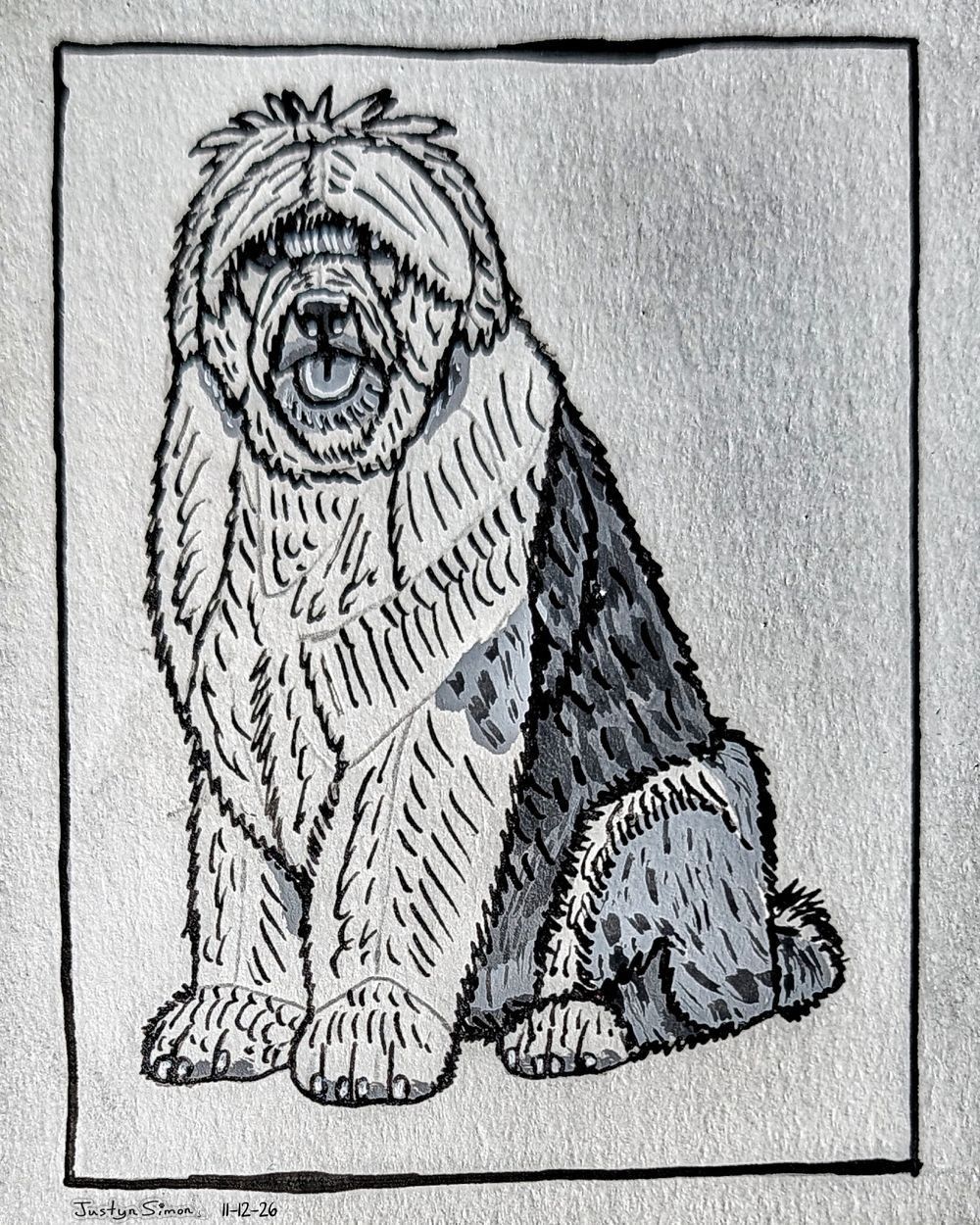
For this drawing, I decided to portray an Old English Sheepdog sitting in a relaxed, forward-facing pose.
I wanted the illustration to emphasize the dog's distinctive shaggy appearance while maintaining the black-and-gray visual style established throughout my Inktober 2026 collection.
One of the biggest artistic challenges was creating the appearance of thick, layered fur without making the drawing look overly cluttered.
Unlike short-haired breeds, where muscle definition and body contours are often more visible, the Old English Sheepdog's coat conceals much of its underlying anatomy.
This meant relying on the direction of the fur, variations in line thickness, and contrasting gray tones to communicate the dog's overall shape.
Capturing the Shaggy Coat
The most important feature of this illustration is undoubtedly the fur!
I used numerous short, curved, and overlapping ink strokes to suggest the long strands of hair covering the dog's head, chest, legs, and body.
Around the face, I emphasized the thick bangs that hang over the eyes, while carefully outlining the nose and mouth to keep the dog's expression recognizable.
For the chest and front legs, I varied the direction and spacing of the lines to create a sense of volume and texture.
The darker portions of the coat provided another opportunity to experiment with contrast.
By combining black ink outlines with gray washes, I was able to separate the darker areas from the lighter fur without introducing additional colors.
Working With Black Ink and Gray Washes
One of my goals for Lexicon Lands has been to explore how much detail I can achieve while working with a limited monochromatic palette.
For this illustration, I used black India ink to establish the outlines, individual fur strands, and darker details.
Gray washes helped distinguish the coat's darker sections and add depth to the overall composition.
I also incorporated a simple rectangular border around the dog, maintaining the consistent presentation used throughout this challenge.
The result is a detailed illustration that celebrates the Old English Sheepdog's recognizable appearance through traditional ink techniques.
Art Supplies and Digital Programs
As with my previous Inktober 2026 drawings, I combined traditional art materials with digital finishing techniques.
Traditional Art Supplies
-
Mechanical pencil: Used to sketch the initial composition and establish the dog's proportions.
-
Kneaded eraser: Used to remove unwanted pencil marks and refine the sketch.
-
Black and white India ink with dip pens: Used for outlining, fur details, and fine linework.
-
Gray wash: Used to create shading, contrast, and tonal variation.
-
Acrylic paint pens: Used for finishing details, including the border and signature.
Digital Editing
After completing the traditional drawing, I used two digital programs to prepare the finished artwork:
Snapseed: For photographic adjustments and improving the presentation of the scanned or photographed artwork.
Procreate: For additional digital refinements and preparing the final image for display.
Combining traditional and digital methods allows me to retain the handmade appearance of my drawings while improving their final presentation for my website and art prints.
Why I Chose the Old English Sheepdog for Letter O
When planning my Lexicon Lands collection, I wanted to feature a wide variety of dog breeds with different appearances, coat types, and backgrounds.
The Old English Sheepdog was an excellent choice for the letter O because its thick, shaggy coat offers a completely different drawing experience from many of the breeds I've illustrated so far.
From the smooth coat of the Dalmatian to the thick fur of the Leonberger, each breed presents its own artistic challenges.
The Old English Sheepdog stands out because of the sheer amount of fur covering its body.
It was a great opportunity to practice creating texture through linework while exploring how light and dark areas can define a dog's appearance.
Continuing the Lexicon Lands Journey
With the Old English Sheepdog completed, I've now reached letter O, the 15th alphabetical entry in my Inktober 2026: Lexicon Lands A–Z Dogs collection!
This project features 26 different dog breeds, representing every letter of the alphabet, along with a special bonus drawing of Valor, my White Swiss Shepherd mascot.
Each illustration gives me an opportunity to experiment with traditional ink techniques while celebrating the remarkable diversity of dogs.
The breeds featured so far include everything from powerful working dogs and energetic terriers to gentle giants and fluffy companions.
And there are still plenty of interesting breeds ahead!
The next entry will feature the Pharaoh Hound, representing the letter P.
Shop the Old English Sheepdog Artwork
If you love Old English Sheepdogs or enjoy detailed black-and-white dog illustrations, you can explore fine art print options featuring this drawing on my website.
Whether you're decorating your home, looking for a gift for a sheepdog enthusiast, or collecting artwork from my Lexicon Lands series, this illustration celebrates the charm of one of the world's most recognizable shaggy dogs.
Shop O Is for Old English Sheepdog – Inktober 2026
You can also explore more of my dog artwork and follow along as I continue working through the alphabet!
Final Thoughts
The Old English Sheepdog was an enjoyable addition to my Inktober 2026 collection, especially because of the challenges involved in illustrating its thick, shaggy coat.
From the detailed fur around its face to the contrasting black-and-gray sections of its body, this drawing gave me another opportunity to explore the possibilities of traditional ink illustration.
I'm looking forward to continuing Lexicon Lands and sharing the remaining breeds as I complete them!
Which dog breed has been your favorite from my Inktober 2026 collection so far?
Thanks for following along with my artistic journey!
Justyn Simon
Artist and Founder of The Artistic Shepherd
The Artistic Shepherd – Where Creativity and Canine Companionship Meet!